
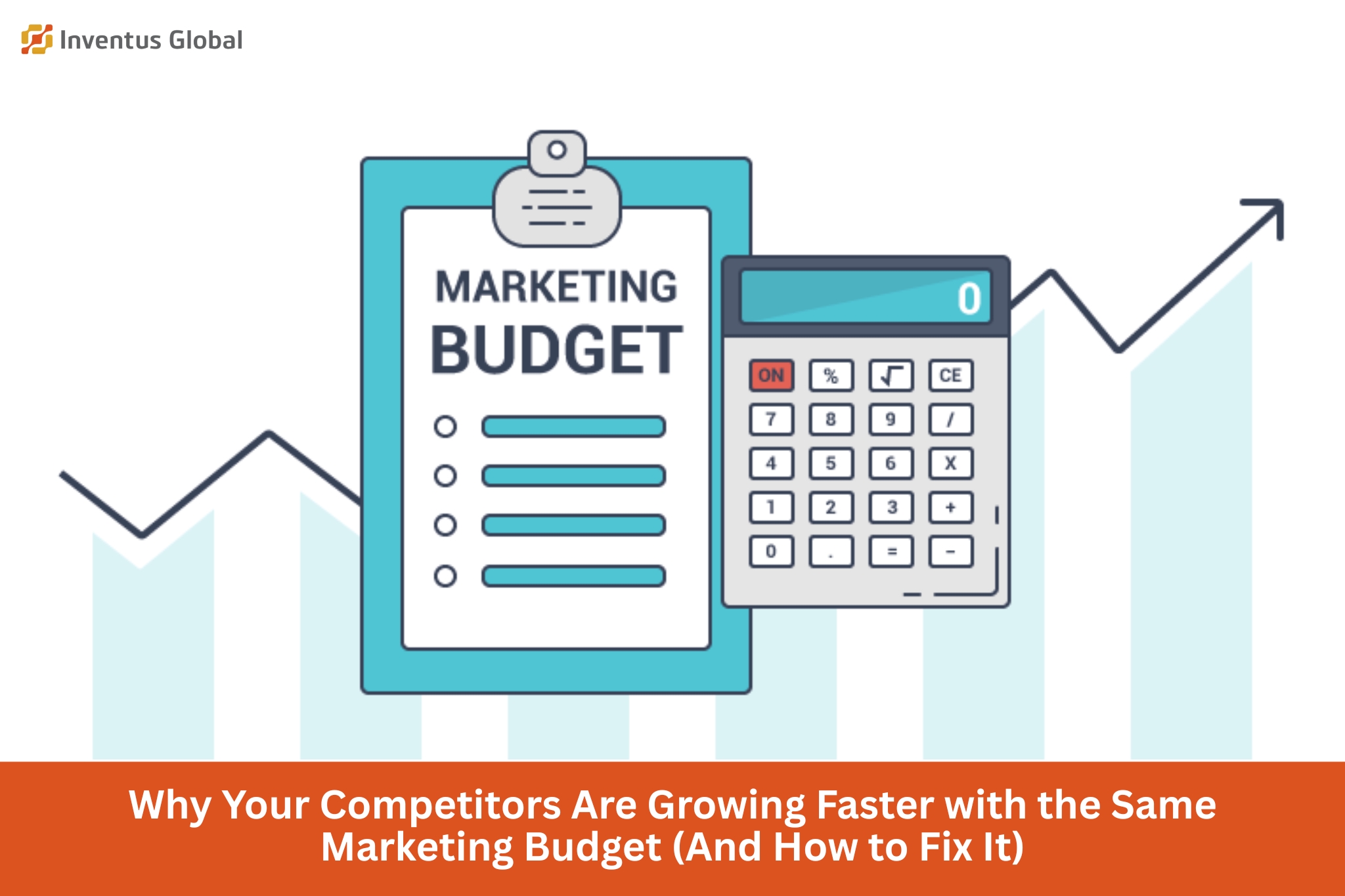
You’re putting in the work. Your ads are live, your social media grid looks professional, and you might even have a dedicated team or agency handling the heavy lifting. Yet, you look over at your competitor and realize they are out-pacing you, despite having a nearly identical budget.
Here’s the reality: It’s rarely about spending more; it’s about marketing efficiency, execution, and relentless optimization.
Let’s look at why your competitors are winning and how you can flip the script.
1. The Real Problem: Identifying the “Marketing Performance Gap”

Two businesses can both invest ₹1,00,000 this month and see polar opposite results. This disconnect is what we call the marketing performance gap.
When you conduct a competitor marketing strategy comparison, you’ll often find that why competitor marketing is more effective isn’t because of a higher budget, but because of a “sharper” approach. They likely have:
- Granular targeting (speaking to a specific person, not “everyone”).
- Messaging that hits a specific pain point.
- A follow-up system that doesn’t let leads go cold.
Quick Self-Check:
Do you know your actual cost per customer? Or which specific channel is driving revenue versus just “likes”? If the answer is not clear ,a marketing performance gap analysis starts with knowing your numbers as well as you know your product.
2. They Aren’t Spending More—They’re Wasting Less
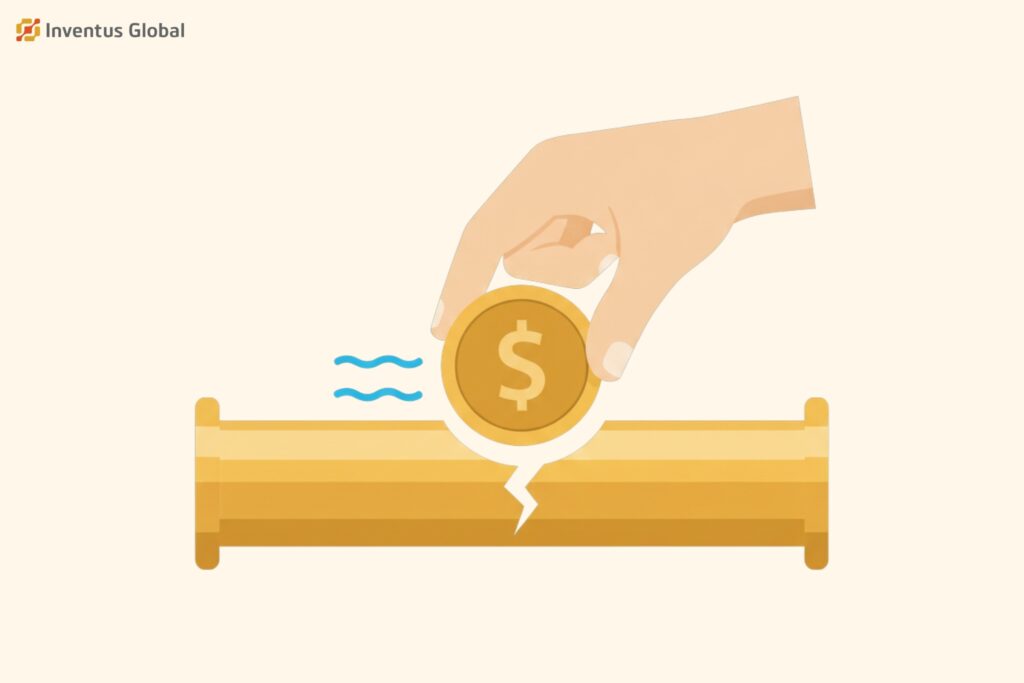
High-growth companies prioritize marketing budget optimization strategies over simply increasing their spend. They treat their budget like a scientist treats an experiment.
Instead of letting a mediocre ad run for a month, they use performance marketing tactics to cut underperforming ads within days. Ad spend optimization is the art of stopping the “bleed” quickly so you can double down on what’s actually working.
The Golden Rule: Your competitors don’t necessarily have more money; they just stop wasting it faster than you do.
3. Traffic is a Vanity Metric; Conversion is Sanity

Most businesses in Mumbai are obsessed with traffic. “How many clicks did we get?” is the wrong question. The right question is: “What did those clicks do?”
If your website converts at 1% and your competitor’s converts at 3%, they are getting triple the results for the exact same price. This is why conversion rate optimization for small businesses is the biggest growth lever available.
To see a conversion rate improvement, try these small tweaks:
- Write a headline that solves one specific problem.
- Add authentic testimonials from local Mumbai clients.
- Make your “Call to Action” impossible to miss.
- Ensure your site loads in under three seconds.
4. Tightening a “Leaky” Marketing Funnel

Marketing doesn’t usually fail systems do. If you’re running ads but don’t have a retargeting strategy or a WhatsApp follow-up process, you’re essentially pouring water into a bucket full of holes.
By improving marketing funnel performance, you ensure that a lead who clicks an ad today doesn’t forget about you tomorrow. A tight funnel leads to a massive customer acquisition cost reduction. When your follow-up is automated and structured, your ROI naturally climbs because no lead is left behind.
5. Tracking What Actually Moves the Needle

While many are distracted by “vanity metrics” like reach and impressions, the winners are looking at marketing analytics insights. They practice data-driven marketing by focusing on:
- ROAS (Return on Ad Spend)
- Customer Lifetime Value
- Revenue per Campaign
If you want to know how to improve marketing ROI without spending more, start using this simple formula every month:
Marketing ROI =
(Revenue Generated from Marketing – Marketing Cost) ÷ Marketing Cost × 100
Example:
If you spend ₹1,00,000 and generate ₹4,00,000 revenue:
ROI = (4,00,000 – 1,00,000) ÷ 1,00,000 × 100
ROI = 300%
If you aren’t calculating this, you aren’t managing your growth—you’re just guessing.
Your 30-Day “Fix-It” Action Plan
If you want to increase growth without increasing ad spend, follow these steps:
- Audit the Journey: Walk through your own funnel from the ad to the sale. Where does it feel clunky? Fix that first.
- Optimize Before Scaling: Don’t put more money into a low-converting page. Improve the messaging first.
- Reallocate: Move 80% of your budget to the one or two channels that have actually closed a sale in the last 90 days.
- Listen to the Market: Look at your competitor’s ads. What are they saying that you aren’t? Use those marketing analytics insights to refine your own voice.
FAQs:
1. Is it better to focus on Google Ads or Social Media for growth?
Focus on intent. If people are searching for your service (like “Plumbers in Navi Mumbai”), use Google Ads. If you need to build brand awareness or visual appeal, Social Media is your go-to.
2. How do I reduce my Customer Acquisition Cost (CAC)?
Improve your landing page conversion. If the same amount of ad spend results in more customers because your page is more persuasive, your cost per customer automatically drops.
3. What is a “good” Marketing ROI?
While it varies by industry, a common benchmark is a 5:1 ratio (₹5 in revenue for every ₹1 spent). If your ROI is below 2:1, you likely have a “leaky” funnel that needs fixing.
4. How often should I optimize my marketing campaigns?
Check your high-level data weekly, but perform deep-dive optimizations (like changing ad creatives or audience targeting) every two to four weeks to allow enough data to accumulate.
5. Why is my competitor’s messaging working better than mine?
They are likely focusing on benefits, not features. Instead of saying what they do, they are clearly explaining how they solve a specific problem for the local Mumbai customer.
The Bottom Line
Grow faster with the same marketing budget by becoming the most efficient player in your niche. In a competitive market like Mumbai or Navi Mumbai, the winner isn’t the one with the biggest wallet—it’s the one with the smartest system.


)
No comment