
The landscape of brand engagement has shifted. As we navigate the most significant digital marketing trends 2026 has to offer, one technology stands at the forefront: augmented reality in digital marketing. No longer a futuristic gimmick, AR marketing has become a primary vehicle for storytelling and consumer interaction.
By overlaying digital information onto the physical world, brands are creating immersive environments that drive higher conversion rates and deeper brand loyalty than traditional video or static ads ever could.
What is Augmented Reality?
Augmented Reality is Transforming Digital Marketing in 2026, and before diving into strategy, it’s essential to define the technology behind this shift. What is Augmented Reality? Simply put, AR is a technology that integrates digital content such as 3D models, animations, or data into a user’s real-world environment through a device like a smartphone, tablet, or smart glasses.
Unlike Virtual Reality (VR), which shuts out the physical world, AR enhances it, making it the perfect tool for on-the-go consumer engagement. Augmented Reality is Transforming Digital Marketing in 2026 by enabling brands to create immersive and interactive experiences that capture customer attention in real time.
From virtual product try-ons and interactive advertisements to location-based promotions, AR helps businesses bridge the gap between the digital and physical worlds. This not only improves customer engagement but also increases purchase confidence, strengthens brand recall, and delivers more personalized experiences that drive higher conversions. Businesses looking to stay ahead of these innovations should also explore how AI is transforming digital marketing enabling brands to create highly relevant and data-driven customer experiences.
The Benefits of Augmented Reality in Marketing
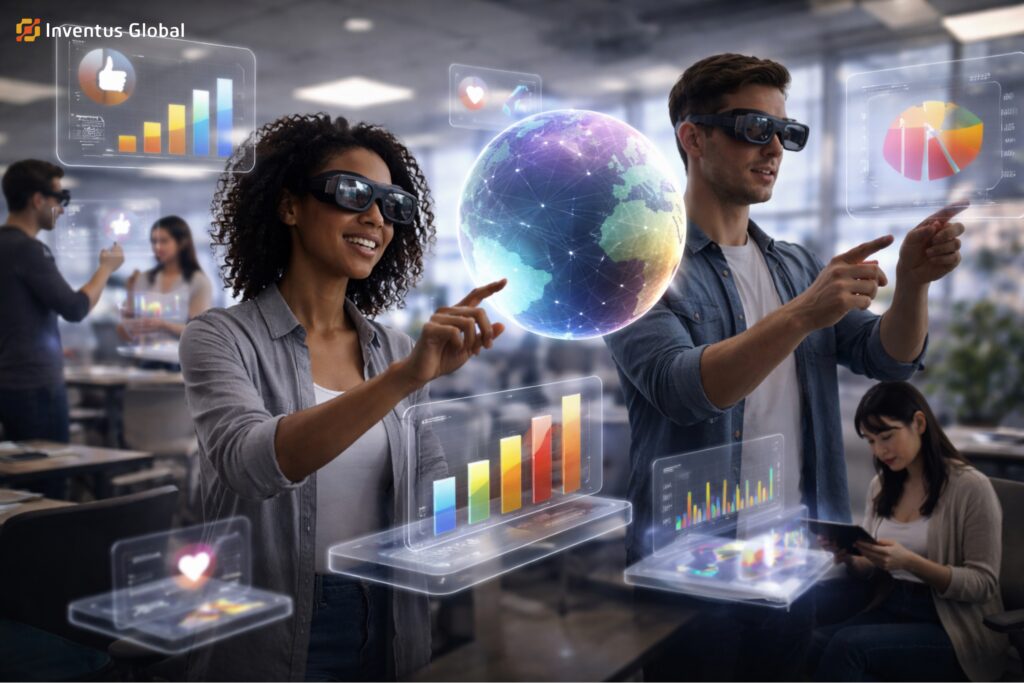
Why are brands pivoting their budgets toward AR? The benefits of augmented reality in marketing are rooted in psychology and utility:
- Increased Engagement: Users spend significantly more time interacting with an AR experience than a standard display ad.
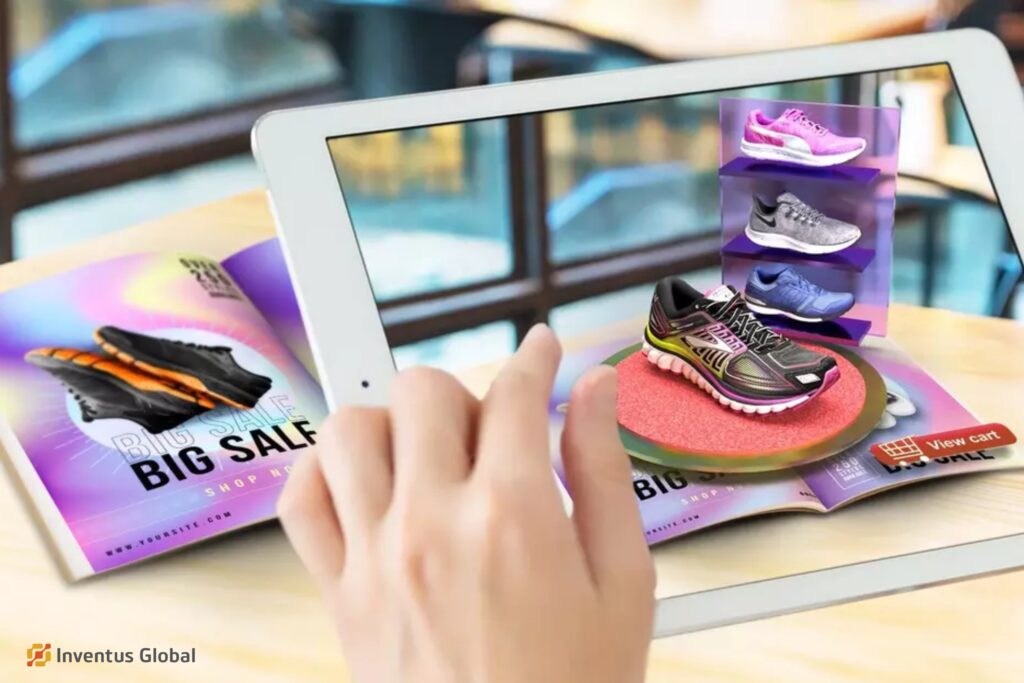
- Reduced Return Rates: Especially in retail, “try-before-you-buy” features lead to more confident purchases.
- Viral Potential: High-quality AR experiences are inherently shareable, providing organic reach.
- Data Collection: AR allows brands to track how users interact with products in 3D space, providing deeper insights into consumer preferences.
AR in E-commerce India: A Growing Powerhouse
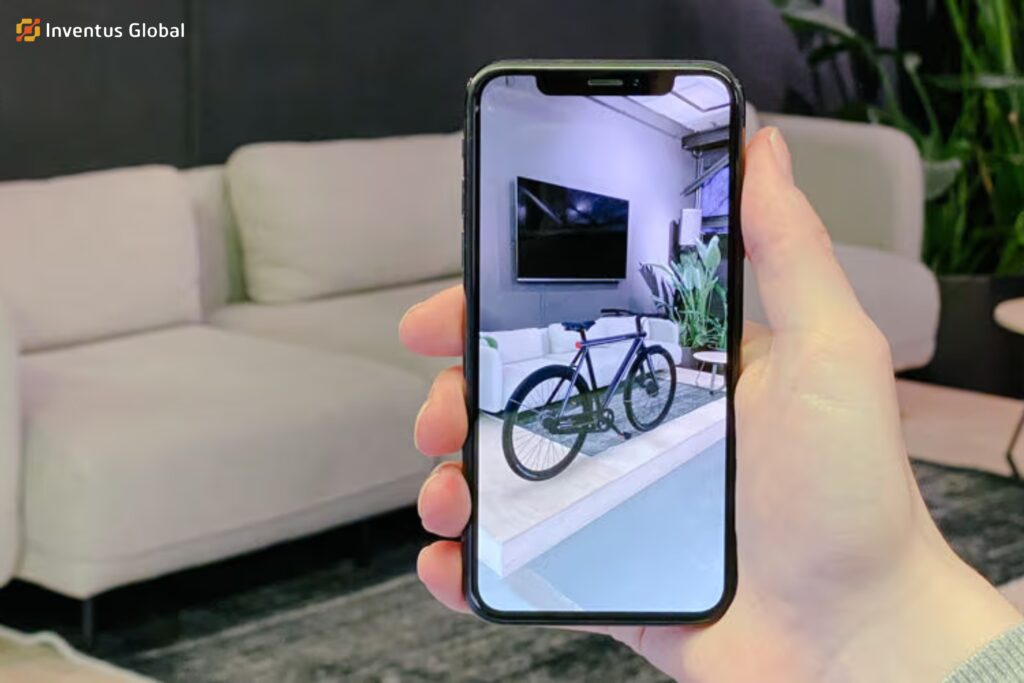
The surge of AR in e-commerce India has been particularly dramatic. With the expansion of 5G across the subcontinent, Indian consumers are increasingly using AR to visualize furniture in their homes or try on jewelry virtually. From major platforms like Flipkart to niche luxury brands, the ability to bridge the gap between “online” and “offline” is solving the historical trust deficit in Indian e-retail.
Augmented Reality Examples in Advertising India
Several brands are leading the way with augmented reality examples in advertising India. For instance, automotive companies are now allowing potential buyers in Delhi and Bangalore to “place” a full-scale SUV in their driveway via a smartphone link, exploring the interior and changing colors in real-time without visiting a showroom.
How to Use Augmented Reality in Digital Marketing
If you’re wondering how to use augmented reality in digital marketing, start by identifying your customer’s biggest “friction point.”
- Product Visualization: Use 3D models to show how a product fits in a user’s space.
- Interactive Packaging: Use AR triggers on physical packaging to reveal recipes, assembly instructions, or brand stories.
- Gamification: Create location-based AR hunts to drive foot traffic to physical stores.
Social Media AR Filters Marketing
One of the most accessible entry points is social media AR filters marketing. Platforms like Instagram and Snapchat have democratized AR, allowing brands to create custom face filters or world effects. These filters turn users into brand ambassadors as they share “branded” content with their own followers.
AR Marketing Strategies for Small Businesses in Mumbai
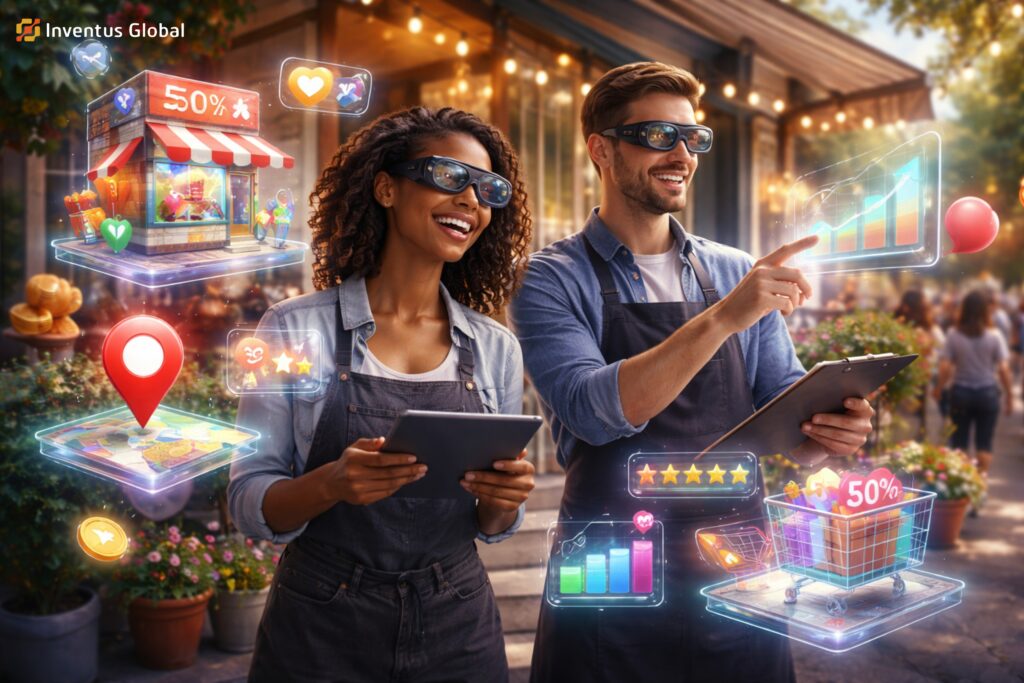
You don’t need a massive tech budget to compete. Effective AR marketing strategies for small businesses in Mumbai often focus on localized impact.
- Localized Scavenger Hunts: A café in Bandra could use QR-code-triggered AR to offer discounts to customers who “find” digital tokens near their shop.
- Virtual Try-Ons: Local boutiques can utilize plug-and-play AR tools to allow customers to see how a saree or accessory looks from the comfort of their home.
Successful AR Advertising Examples
To inspire your next campaign, look at these AR advertising examples:
- IKEA Kreativ: Allows users to completely delete their existing furniture in a photo and replace it with IKEA products.
- L’Oréal Beauty Tech: Their “Magic Mirror” uses AR to let users test makeup shades with incredible color accuracy.
- Pepsi’s “Unbelievable” Bus Shelter: One of the classic augmented reality examples in advertising, where a bus shelter screen showed aliens and tigers “appearing” on a real London street.
As we move through 2026, the line between the digital and physical continues to blur. For marketers, the message is clear: augment your reality, or risk being left behind in the old one.
While augmented reality creates immersive customer experiences, businesses also need effective follow-up strategies to convert interested prospects into customers. AI-powered calling solutions can help brands engage leads quickly and improve conversion rates.
Frequently Asked Questions:
-
Do customers need to download a specific app to use AR?
No. Augmented Reality is Transforming Digital Marketing in 2026 through WebAR, allowing users to access experiences directly from their mobile browser by scanning a QR code.
-
How does AR improve e-commerce conversion rates?
Augmented Reality is Transforming Digital Marketing in 2026 by providing a “try-before-you-buy” experience that reduces uncertainty and increases purchase confidence. This also helps lower product return rates.
-
What makes AR different from VR?
It overlays digital elements onto your real-world view. Virtual Reality (VR) replaces your entire surroundings with a completely simulated environment.
-
Can AR be used for B2B marketing?
Yes. AR is excellent for B2B brands to showcase heavy machinery, complex medical devices, or architectural plans in 3D during sales presentations or trade shows. Augmented Reality is Transforming Digital Marketing in 2026 across both B2C and B2B industries.
-
Which industries benefit most from AR in India?
Currently, AR in e-commerce India is dominated by the beauty, furniture, eyewear, and real estate sectors, where visualization is key to the purchasing decision.
-
How do I measure the success of an AR campaign?
Key metrics include “Dwell Time” (how long they interact), “Capture Rate” (photos/videos taken), and “Share Rate” on social media, alongside traditional conversion data.
-
Does AR work on all smartphones?
Most smartphones released within the last 5–6 years support AR. As of digital marketing trends 2026, almost all mid-range to flagship devices are fully AR-compatible.
-
Can AR help with local SEO in cities like Mumbai?
Absolutely. Small businesses can use location-based AR triggers that only activate when a user is near their storefront, driving physical foot traffic. Augmented Reality is Transforming Digital Marketing in 2026 by connecting online engagement with offline visits.
-
Is technical expertise required to start with AR?
While complex builds require developers, many “no-code” AR platforms now allow marketers to create basic 3D product visualizations and filters with minimal technical skill. Augmented Reality is Transforming Digital Marketing in 2026 by making advanced marketing tools easier to adopt.
-
Is AR marketing expensive for small businesses?
Not necessarily. While custom apps are pricey, using social media AR filters on platforms like Instagram or Snapchat is highly cost-effective and accessible for smaller budgets. Augmented Reality is Transforming Digital Marketing in 2026 for businesses of all sizes, not just large brands.



No comment