
Table of Contents
It’s 1:00 AM. You promised yourself you’d stop scrolling after five minutes, but here you are – still flicking your thumb, still scrolling, still chasing something. You’re not alone. The Psychology Behind Just One More Scroll explains why billions of people across the world lose track of time in the endless depths of social media feeds. What started as a simple way to connect has turned into an engineered system designed to keep you hooked, powered by algorithms and fueled by the human brain’s reward mechanisms.
At Inventus Global, we believe that understanding user behaviour goes beyond metrics – it’s about decoding the psychology of scrolling and how design choices, algorithms, and emotions merge to create a powerful digital habit. Whether you’re a marketer, a creator, or a consumer, understanding this psychology can help you take control of your time online – or use it to build more ethical, engaging experiences.
In this blog, we’ll explore the hidden science of social media addiction, the infinite scroll effect, and the role of dopamine and social media in shaping the way we interact with our digital environments.
1. The Hook: Why We Can’t Stop Scrolling
The phrase “just one more scroll” perfectly captures the pull of modern apps. Every swipe gives us a sense of anticipation – maybe the next post will be funny, inspiring, or shocking. This unpredictability triggers the brain’s reward system, flooding it with dopamine, the chemical responsible for pleasure and motivation.
This variable reward system is identical to what drives gambling addiction—sometimes you win, sometimes you don’t, and that uncertainty keeps you coming back. That’s the psychology of scrolling: an endless loop of seeking rewards that never feel complete.

2. The Dopamine Loop: How Social Media Keeps You Hooked
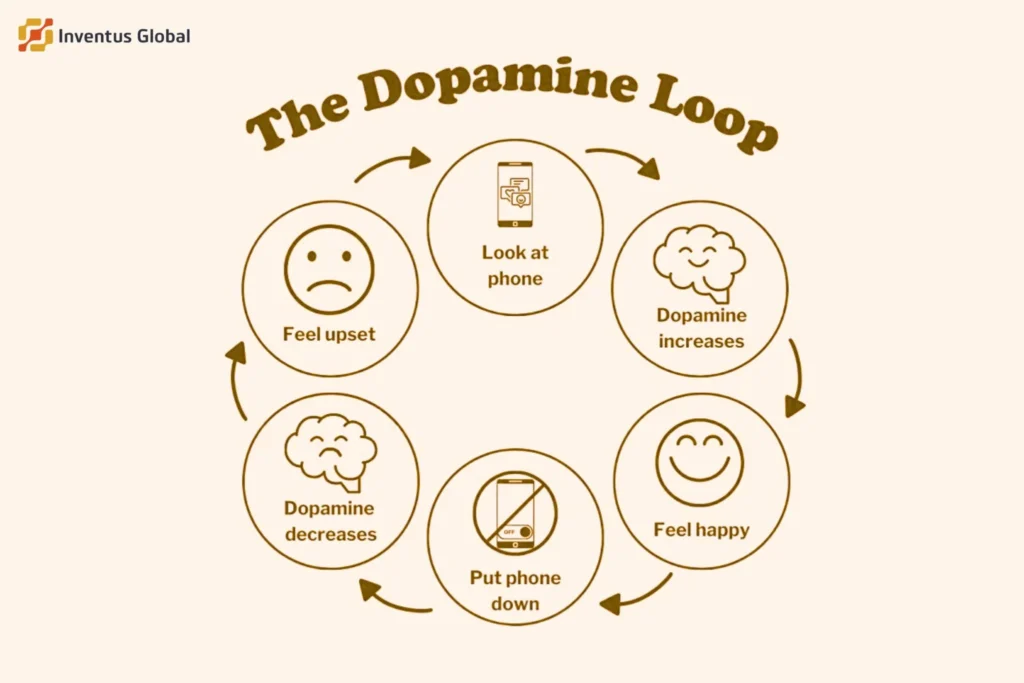
When we talk about dopamine and social media, we’re talking about more than just chemical reactions – it’s about emotional dependency. Every like, comment, or notification becomes a microdose of validation, giving us a small but powerful sense of belonging. Over time, our brains begin to crave these interactions, not for their content but for the dopamine release they trigger.
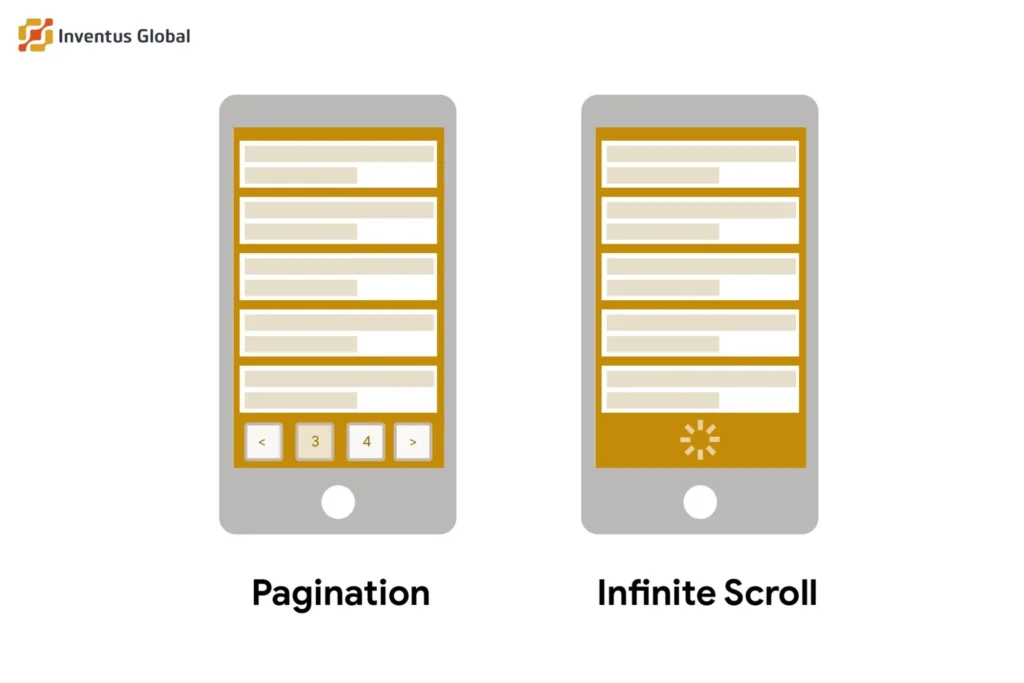
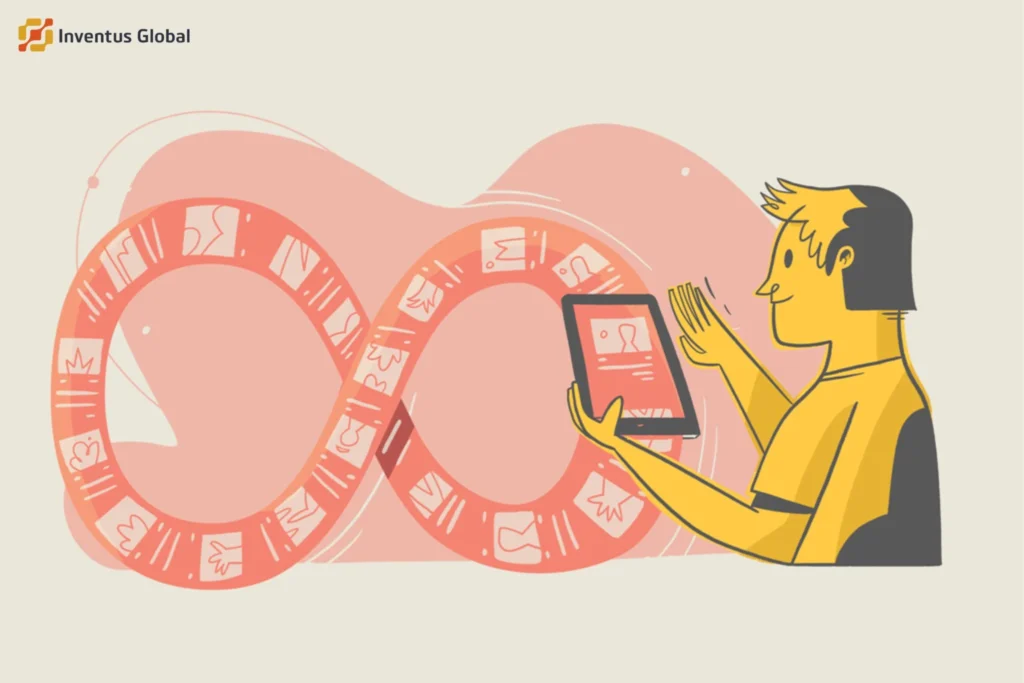
Platforms are designed to exploit this loop. The infinite scroll effect removes natural stopping cues, creating an endless flow of stimuli. Unlike turning a book’s page or finishing a movie scene, there’s no endpoint. You just keep going, always one swipe away from the next hit.
3. The Infinite Scroll Effect: A Design Choice That Changed Everything
When Aza Raskin invented the infinite scroll effect, he didn’t intend to trap people. Yet, this design has arguably become one of the most powerful tools in shaping digital behaviour psychology. By eliminating the need to click “next page,” infinite scrolling created a seamless user experience – but also removed any friction that could help people stop.
The absence of natural pauses keeps your brain in a state of flow. Your attention doesn’t reset—it keeps chasing the next piece of information. This is why social media addiction thrives on design choices that prioritise engagement over well-being.
4. The Illusion of Control: Why You Think You’re Choosing to Scroll
Most people believe they’re in control of their scrolling habits. But in reality, algorithms know more about our digital behaviour psychology than we realize. These systems learn what we pause on, what we like, and even what frustrates us. Then, they optimize feeds to keep us engaged for as long as possible.
The more we scroll, the better these systems predict what will hold our attention next. This feedback loop reinforces why we can’t stop scrolling – because our digital environment evolves around our preferences. The illusion of choice is what makes the habit so hard to break.
5. The Emotional Equation: Validation, Comparison, and FOMO
Another layer of the psychology of scrolling lies in how social media impacts our emotions. Likes, comments, and shares act as digital validation tokens. They feed our need for recognition and belonging. However, the downside is the constant comparison – it’s not enough to post; it’s about how many people engage.
This is where social media addiction deepens. The “Fear of Missing Out” (FOMO) makes people check feeds repeatedly, ensuring they don’t miss trends, moments, or updates. It’s a cycle of seeking reassurance that we are seen, valued, and connected – even if temporarily.
6. The Brain vs. The Algorithm: Who’s Winning?
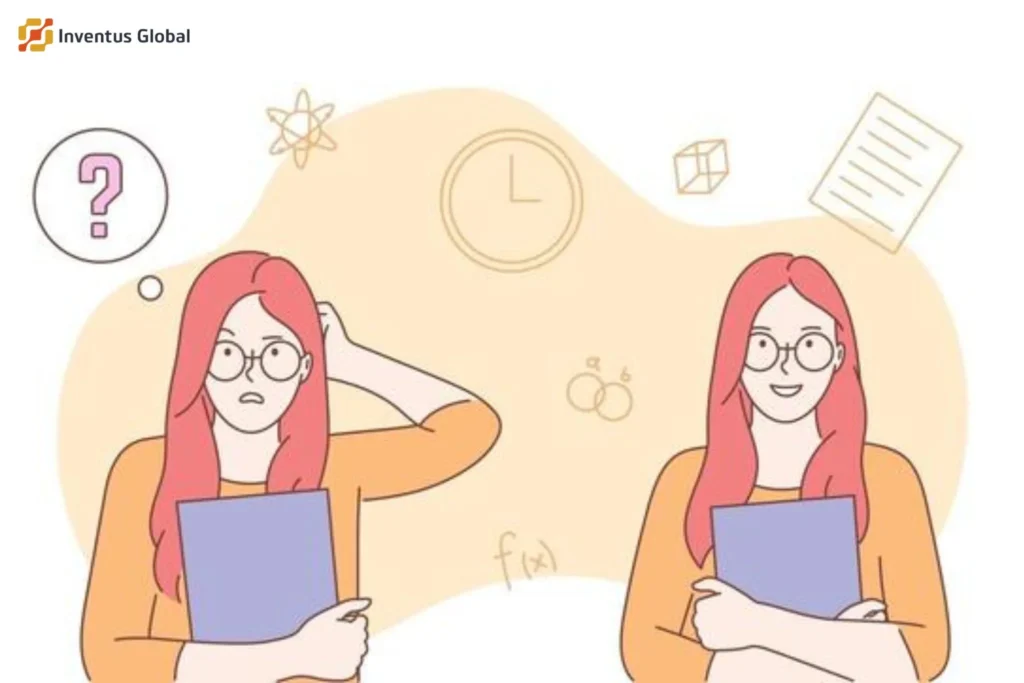
It’s a digital tug-of-war between human willpower and machine learning. While we can rationally understand the psychology behind “just one more scroll”, our emotional brain often overrules logic. Algorithms are built to anticipate this – they adapt in real time to feed us the most engaging mix of content.
This is where dopamine and social media blend with technology. Every refresh tells the algorithm what worked, refining the next batch of content for maximum impact. In a sense, it’s not that we’re weak – it’s that our brains are playing against billion-dollar systems trained to exploit attention.
7. Breaking the Cycle: Reclaiming Your Digital Mind
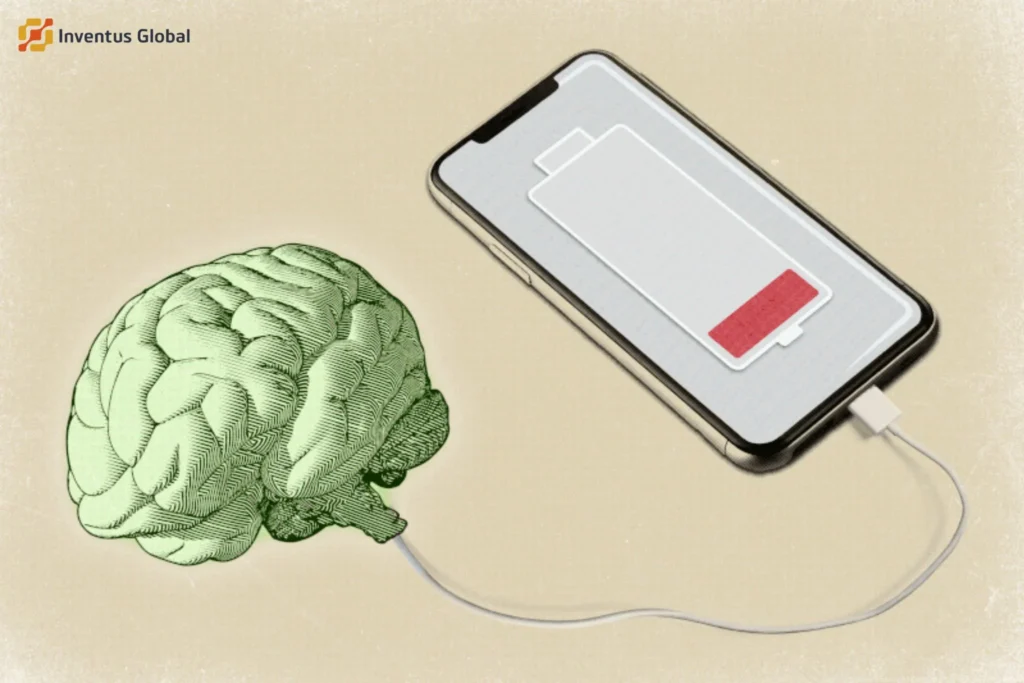
Recognizing the psychology of scrolling is the first step toward regaining control. By understanding how digital behaviour psychology works, users can set mindful limits. Features like screen time alerts or “you’re all caught up” messages help reintroduce stopping cues.
Brands, too, have a role. Ethical design can encourage healthier online habits by building platforms that reward depth over duration. Inventus Global advocates for human-centred digital strategies that empower users rather than manipulate them.
Whether through conscious app usage or smarter design, it’s possible to enjoy social media without being controlled by it. The goal isn’t to quit scrolling—it’s to scroll with awareness.\
Conclusion
The Psychology Behind Just One More Scroll reveals a fascinating intersection of neuroscience, design, and human emotion. From the infinite scroll effect to dopamine and social media, every detail of our digital experiences has been optimised for attention—not intention. The good news? Awareness brings choice.
At Inventus Global, we believe understanding these digital patterns allows brands to connect more meaningfully, ethically, and effectively. The future of engagement isn’t about trapping attention – it’s about earning it through value, empathy, and authenticity.
Image Suggestion: A wide shot of a sunrise viewed through a phone screen, fading into reality – symbolising digital awakening.
FAQs
What is the psychology behind just one more scroll?
It refers to how social media apps trigger dopamine-driven reward systems in our brains, encouraging continuous scrolling through unpredictable content rewards.
How does dopamine affect social media addiction?
Dopamine and social media are deeply linked – every like or notification releases small dopamine spikes, reinforcing the habit loop.
Why can’t we stop scrolling even when we want to?
The infinite scroll effect removes natural stopping points, making our brains crave the next piece of content endlessly.
What is digital behaviour psychology?
Digital behaviour psychology studies how design and technology influence user actions, attention, and emotions online.
How can we overcome social media addiction?
By being aware of the psychology of scrolling, setting limits, and using mindful browsing tools to break unconscious patterns.





No comment